Teadit
Neste projeto, atuei tanto na pesquisa quanto no design visual. Durante a etapa de pesquisa, conduzi entrevistas com stakeholders de diferentes países e colaborei na estruturação da arquitetura da informação. Na etapa de UI, fui responsável pela criação dos wireframes e pelo desenvolvimento do design final, com foco em acessibilidade.
#uxdesign #uidesign #website
Minha contribuição: Pesquisa com usuários, criação de wireframes e desenvolvimento do protótipo de alta fidelidade.
Função: UI/UX Designer
O PROBLEMA
Desafios de escalabilidade em um contexto multinacional
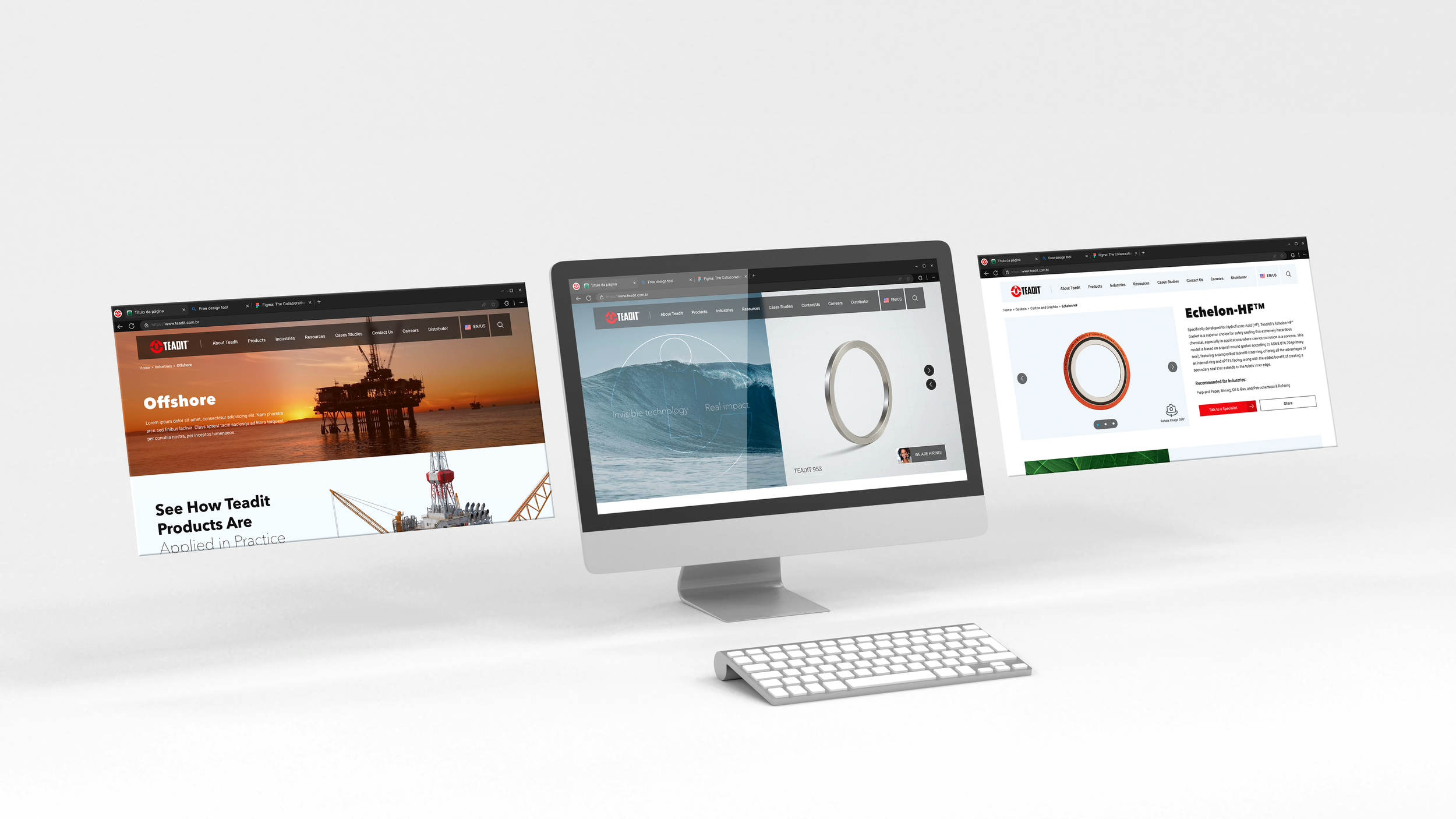
O site da Teadit apresentava um visual desatualizado e uma arquitetura da informação confusa, tornando a navegação pouco intuitiva e dificultando a localização de conteúdos.
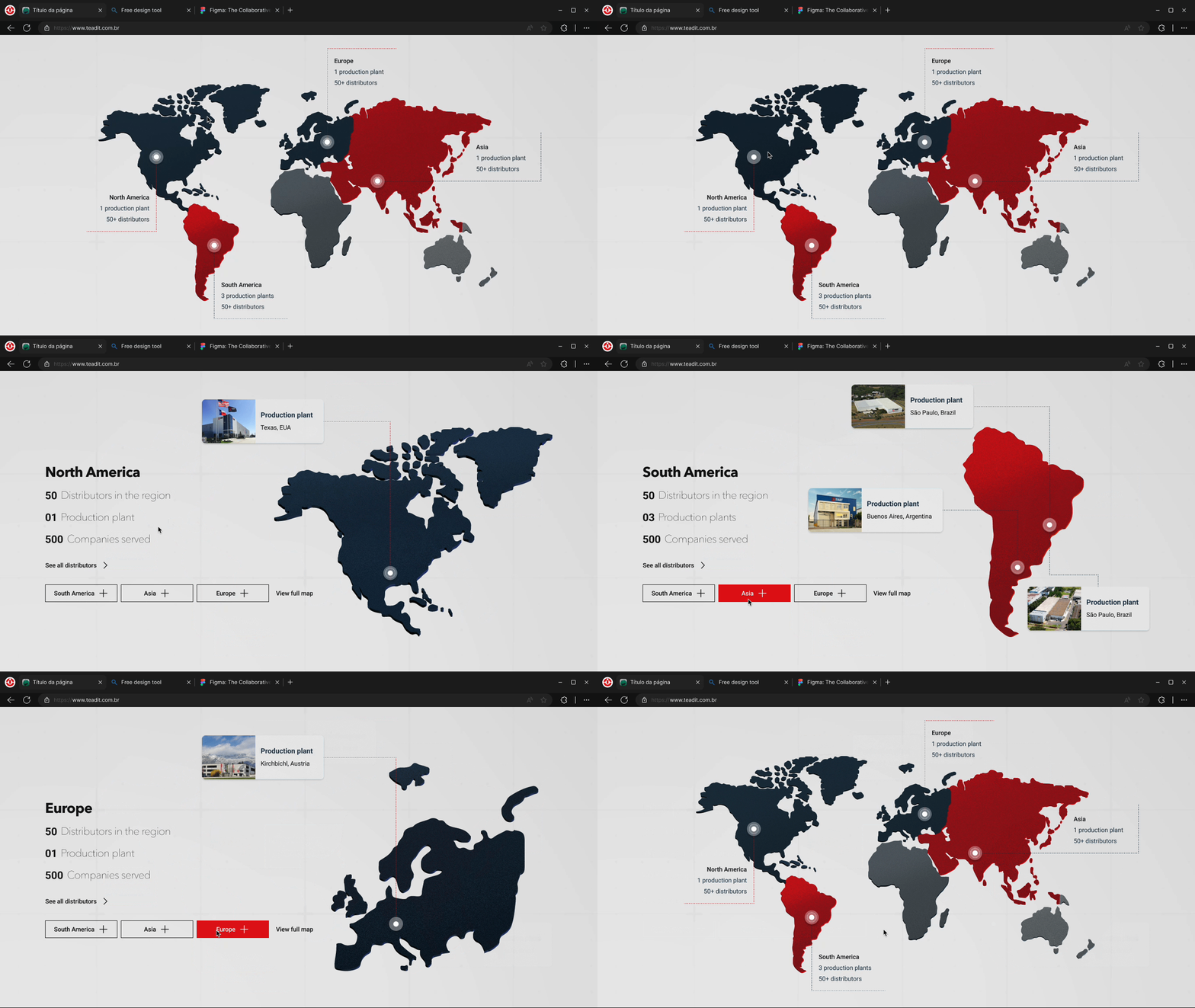
A experiência era ainda mais complexa para usuários que precisavam comparar produtos entre diferentes países, já que as versões locais variavam bastante em estrutura e apresentação. Além disso, o cadastro de produtos era muito manual, exigia grande esforço da equipe e comprometia a consistência das informações entre os mercados.
A SOLUÇÃO
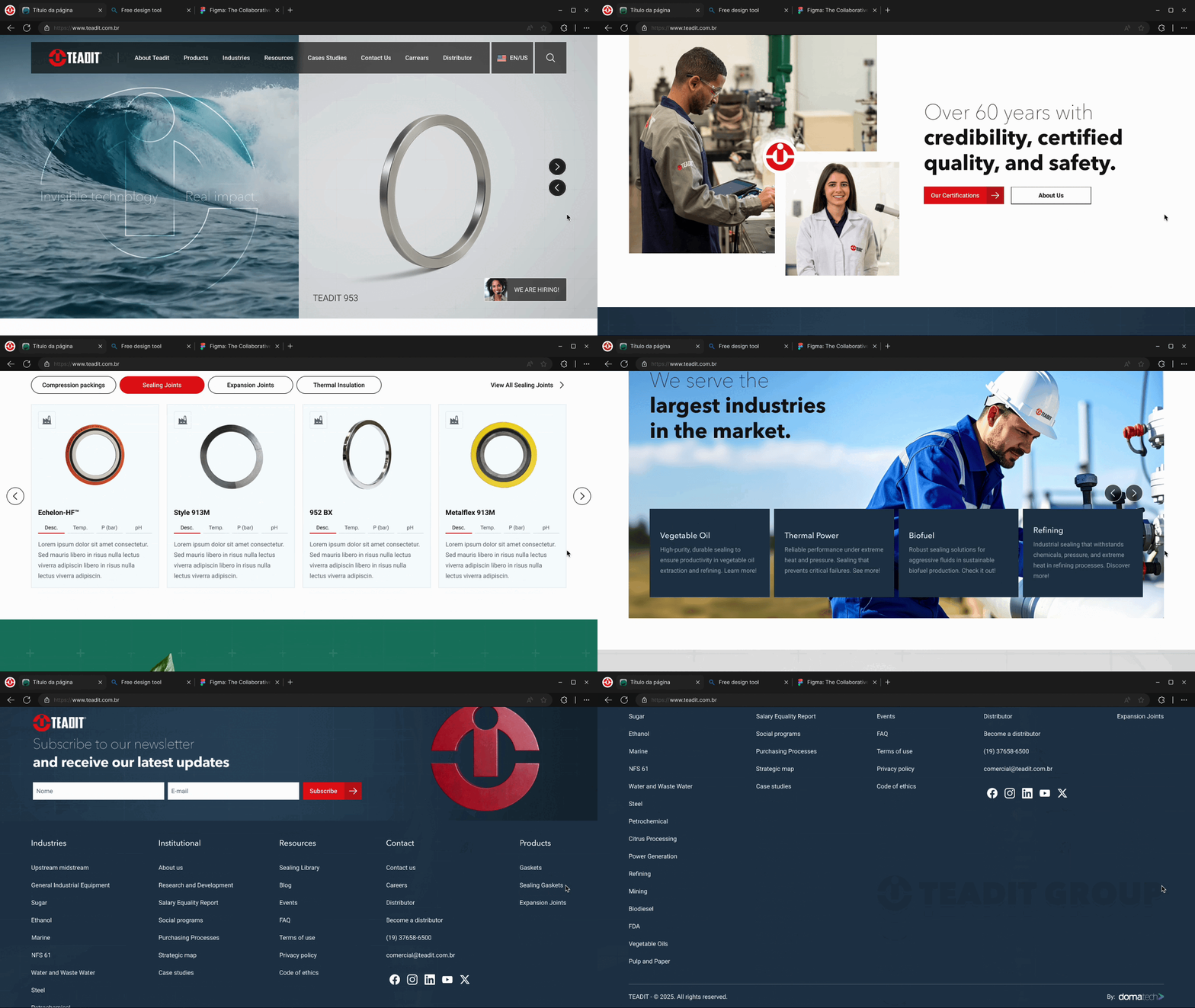
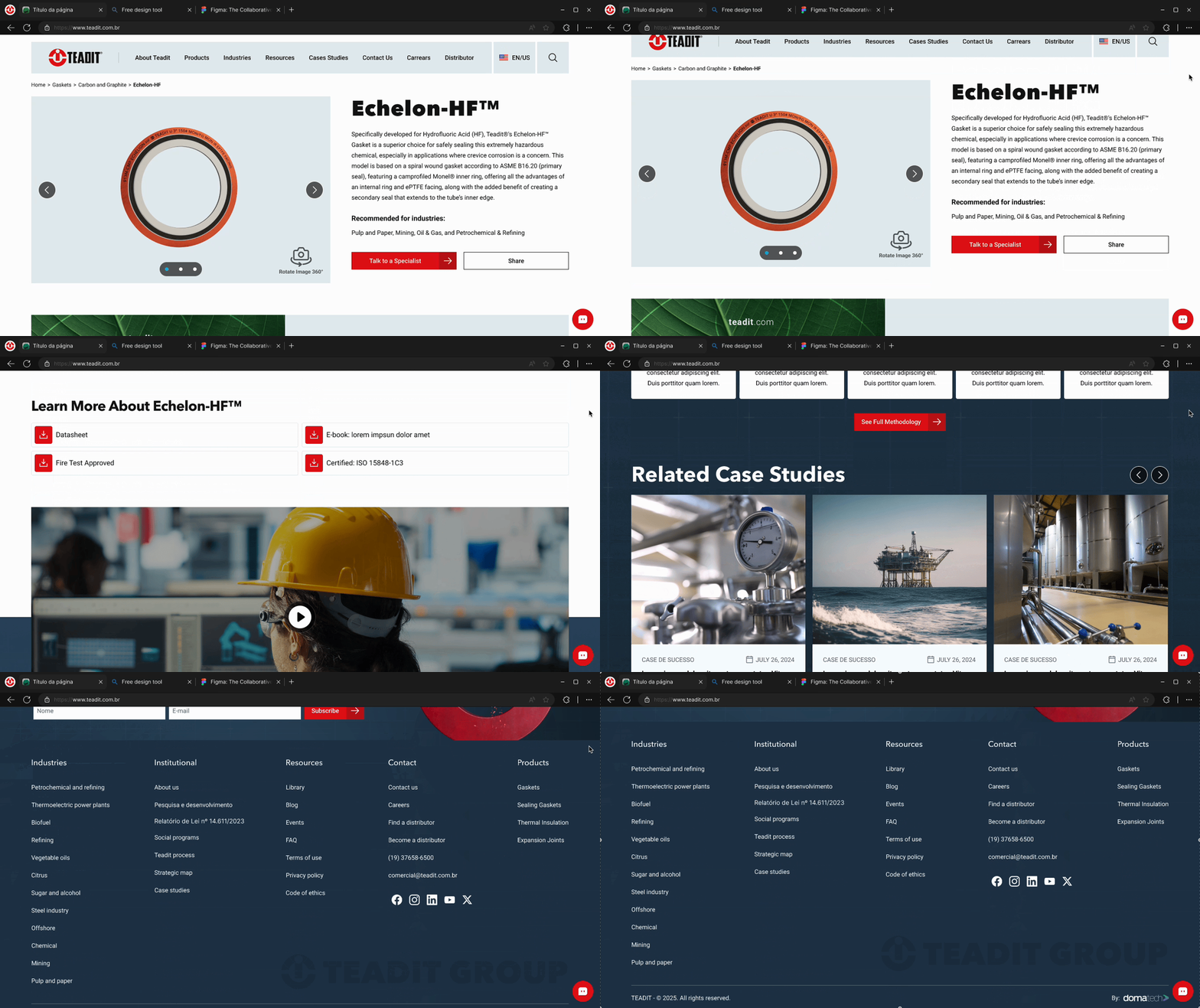
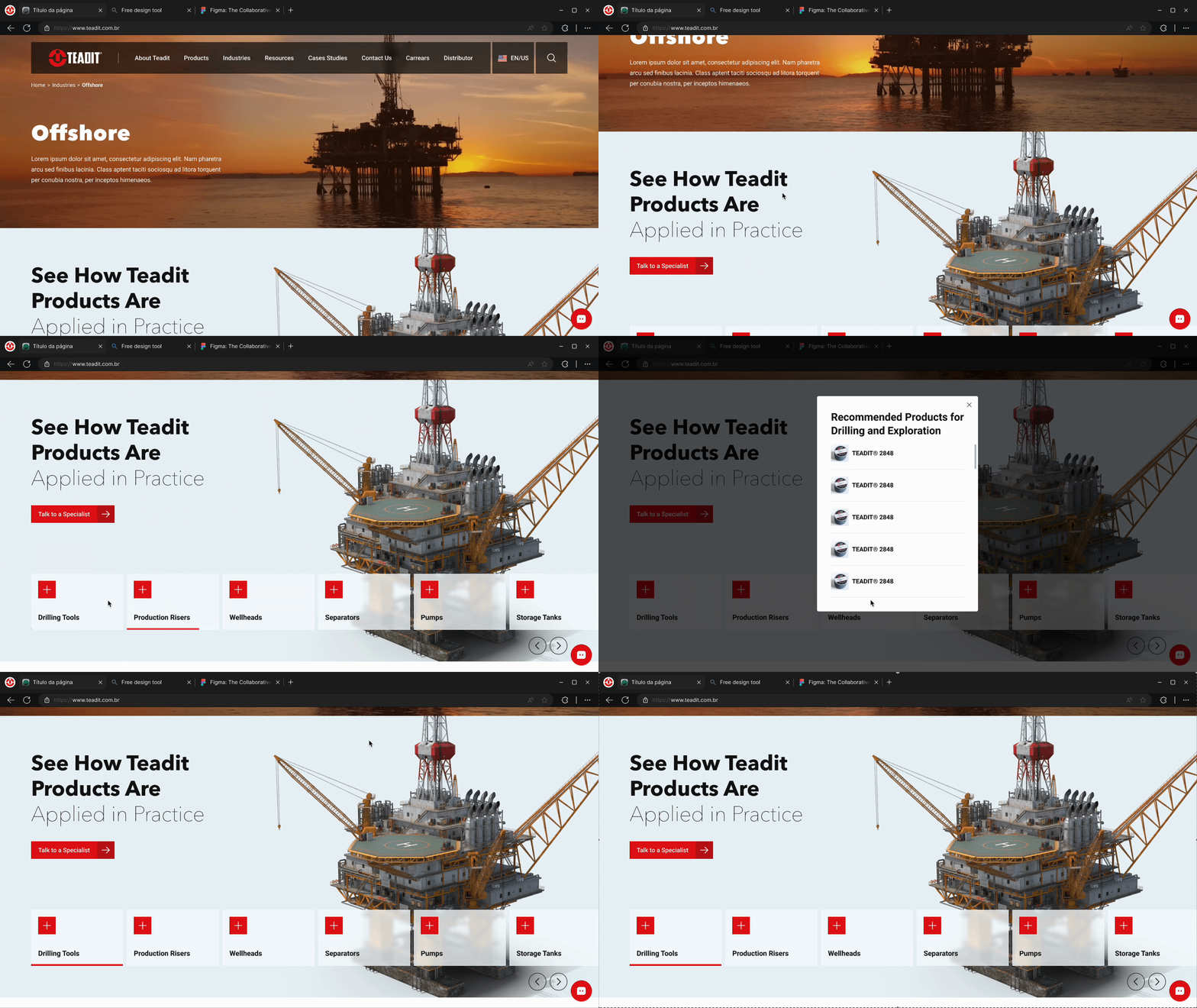
O novo site foi desenvolvido com base nas dores e necessidades dos stakeholders de todos os países, resultando em uma experiência clean, moderna, objetiva, acessível e visualmente consistente.
PESQUISA
Como conduzimos o workshop: uma abordagem em cinco etapas
Após uma entrevista detalhada com os principais stakeholders do projeto, realizamos um workshop online com as equipes responsáveis pelo Brasil, Estados Unidos, Europa e América Latina.
O workshop foi dividido em cinco etapas:
Quebra-gelo
Utilizamos a dinâmica da “pior ideia possível”, em que os participantes imaginaram a pior solução para a empresa ou para o site.
Definição do problema
A equipe da Teadit criou perguntas iniciadas por “Como podemos...”, sempre relacionadas a um desafio do projeto. Por exemplo: “Como podemos ajudar nossos clientes a encontrar a solução de vedação ideal?”
Brainstorming
A equipe utilizou a técnica de braindump, na qual cada participante registrou suas ideias individualmente e em silêncio.
Agrupamento de ideias
As propostas semelhantes foram organizadas em grupos, facilitando a identificação de padrões e direcionamentos.
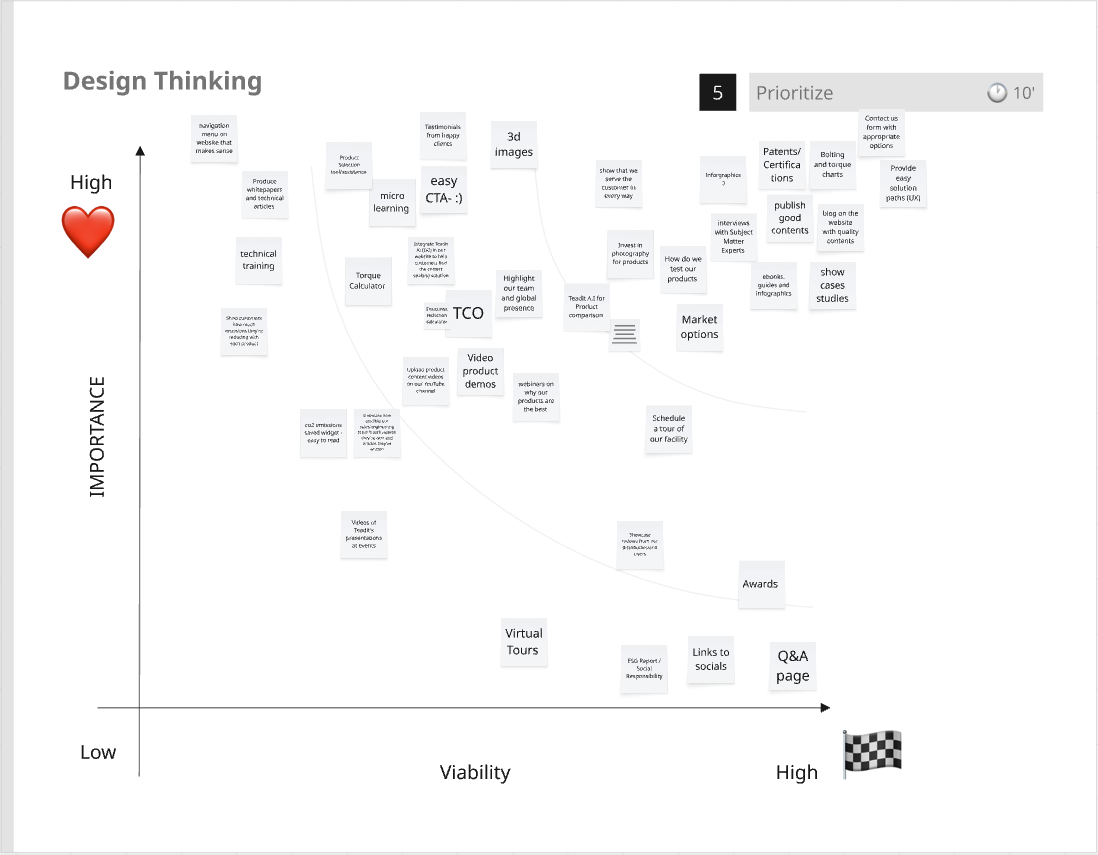
Priorização
Por fim, as ideias foram avaliadas e priorizadas de acordo com sua importância e viabilidade.
ARQUITETURA DA INFORMAÇÃO
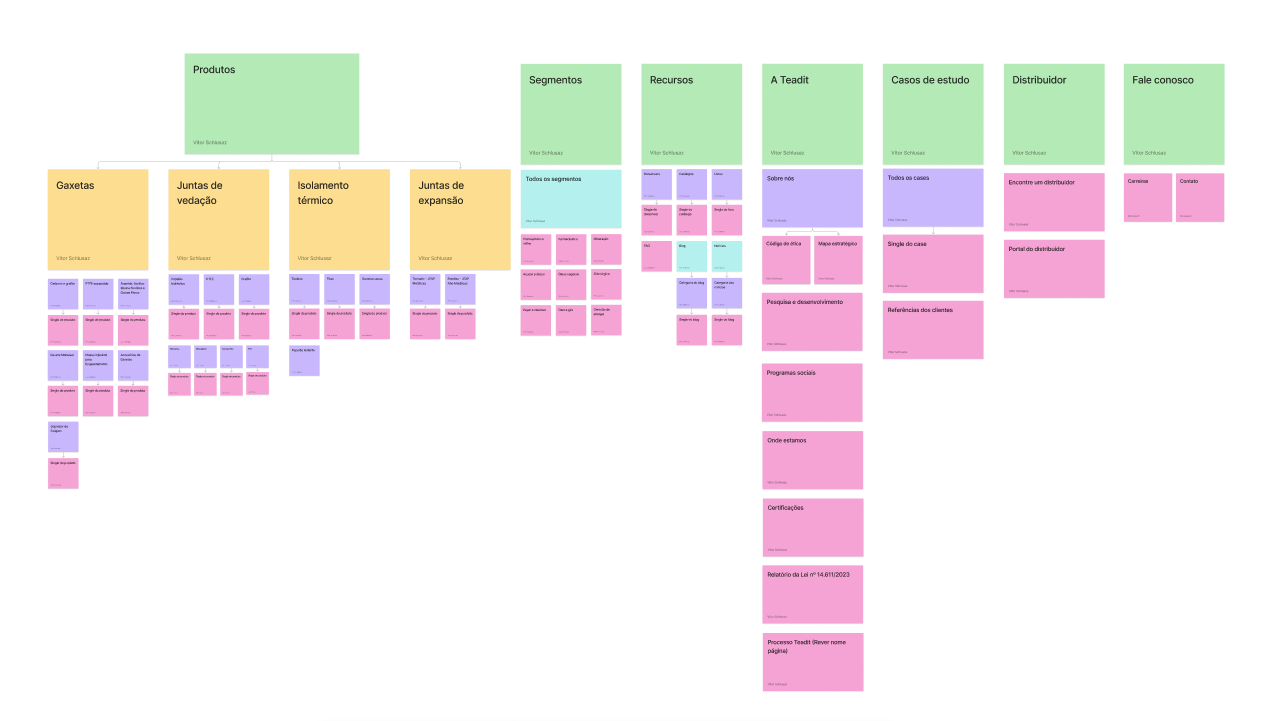
Após a etapa de pesquisa, avançamos para a arquitetura da informação, incorporando as ideias dos workshops e os insights das entrevistas com stakeholders para estruturar o site.
WIREFRAME
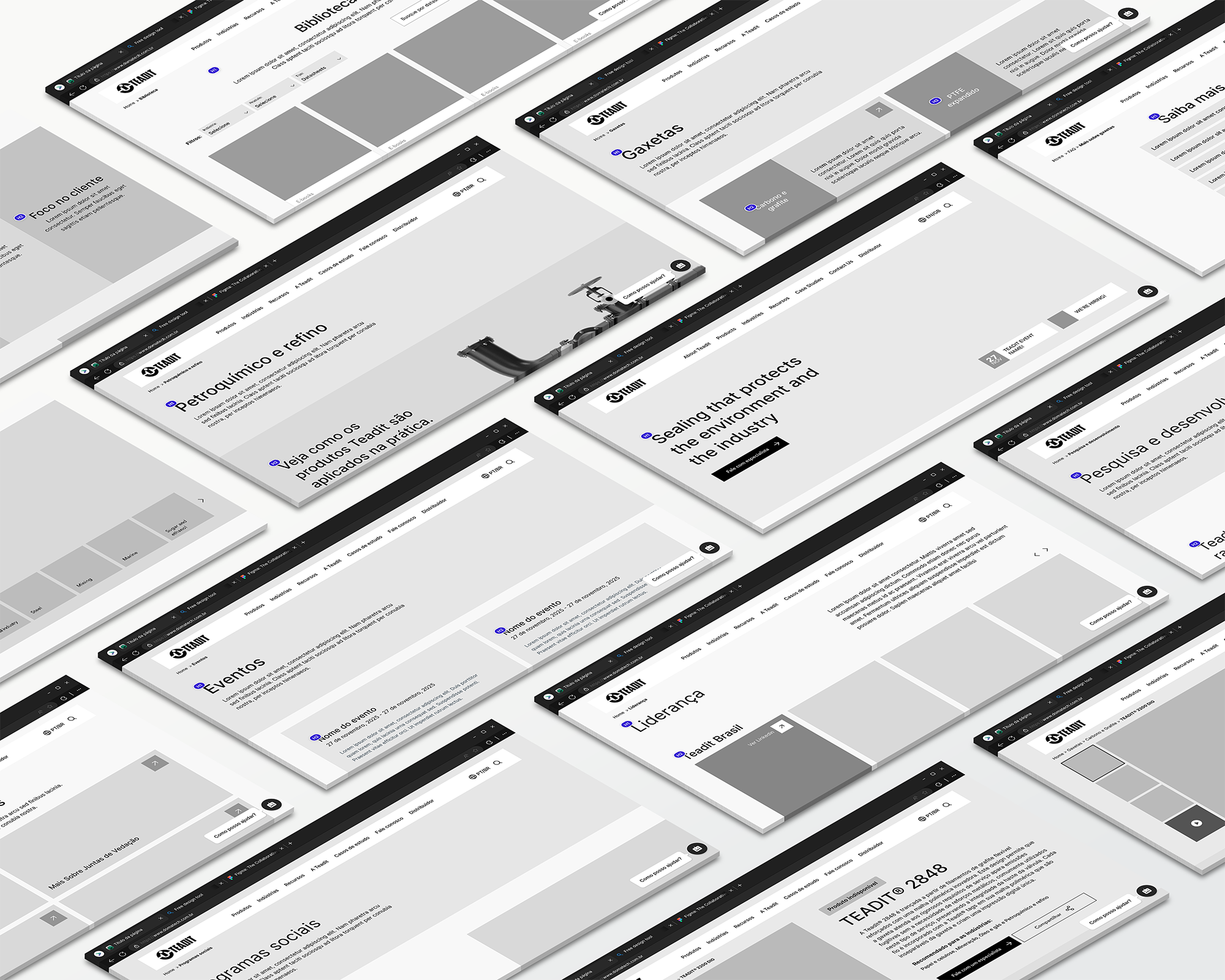
Com base nas pesquisas realizadas com stakeholders de diferentes países e na aprovação da arquitetura da informação, avancei para a criação dos wireframes, validando a estrutura do projeto com o cliente.
ACESSIBILIDADE
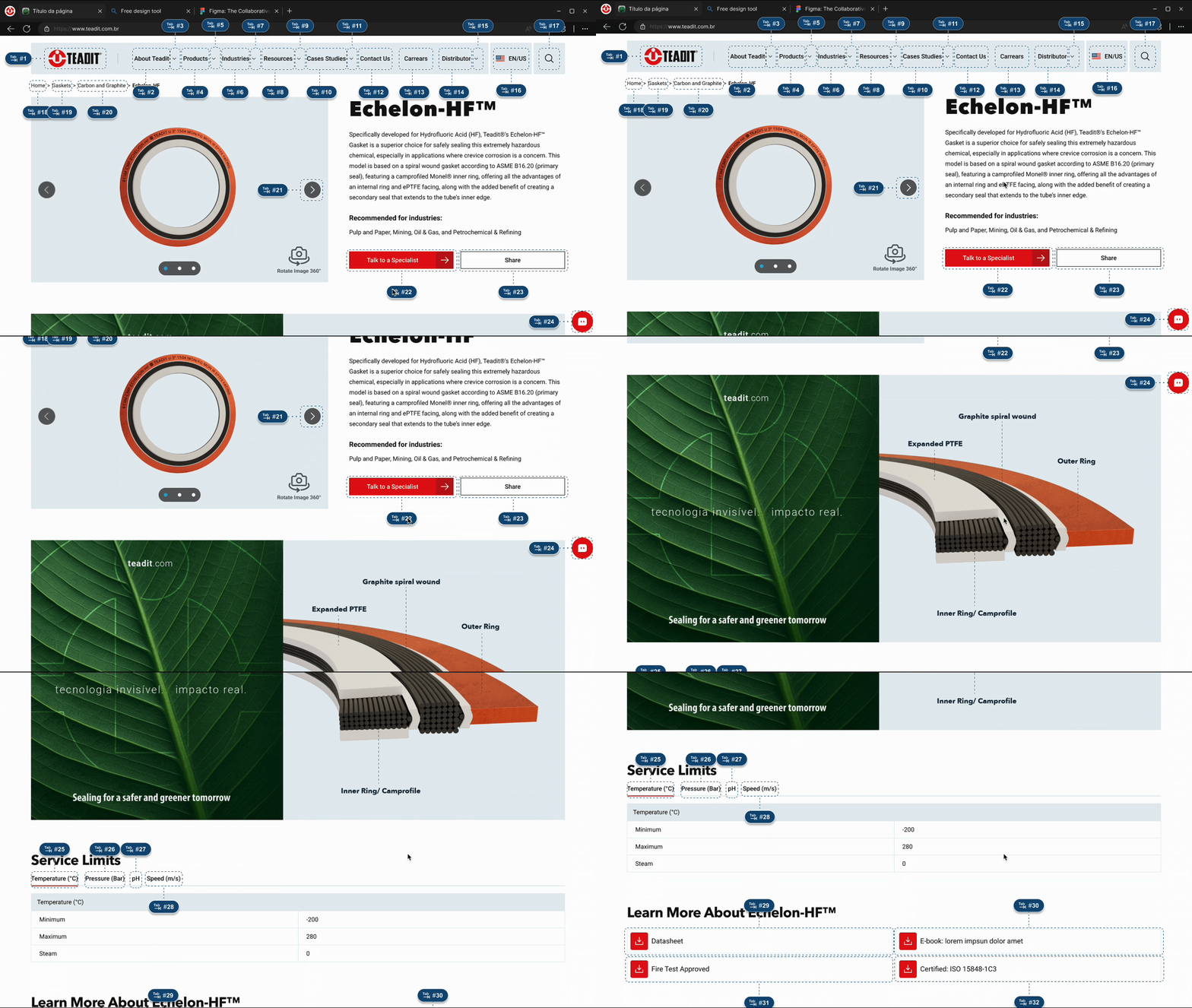
Além de garantir os contrastes recomendados pela WCAG em todo o site, criei um guia de navegação por teclado para orientar a equipe de desenvolvimento e proporcionar uma experiência mais fluida. Também alinhei com a equipe de SEO a aplicação de textos alternativos em imagens e a correta estruturação dos títulos.
Mais projetos
-
![]()
Skydiet
-
![]()
Jaspi
-
![]()
Ligga
-
![]()
OléTV